The Volatile Tale of Ghana’s Tomatoes: From Glut to Gold
Four tomatoes for GHS 20. How did Ghana go from tomato gluts to soaring prices in just a few months? A closer look at the market system failures behind the crisis.
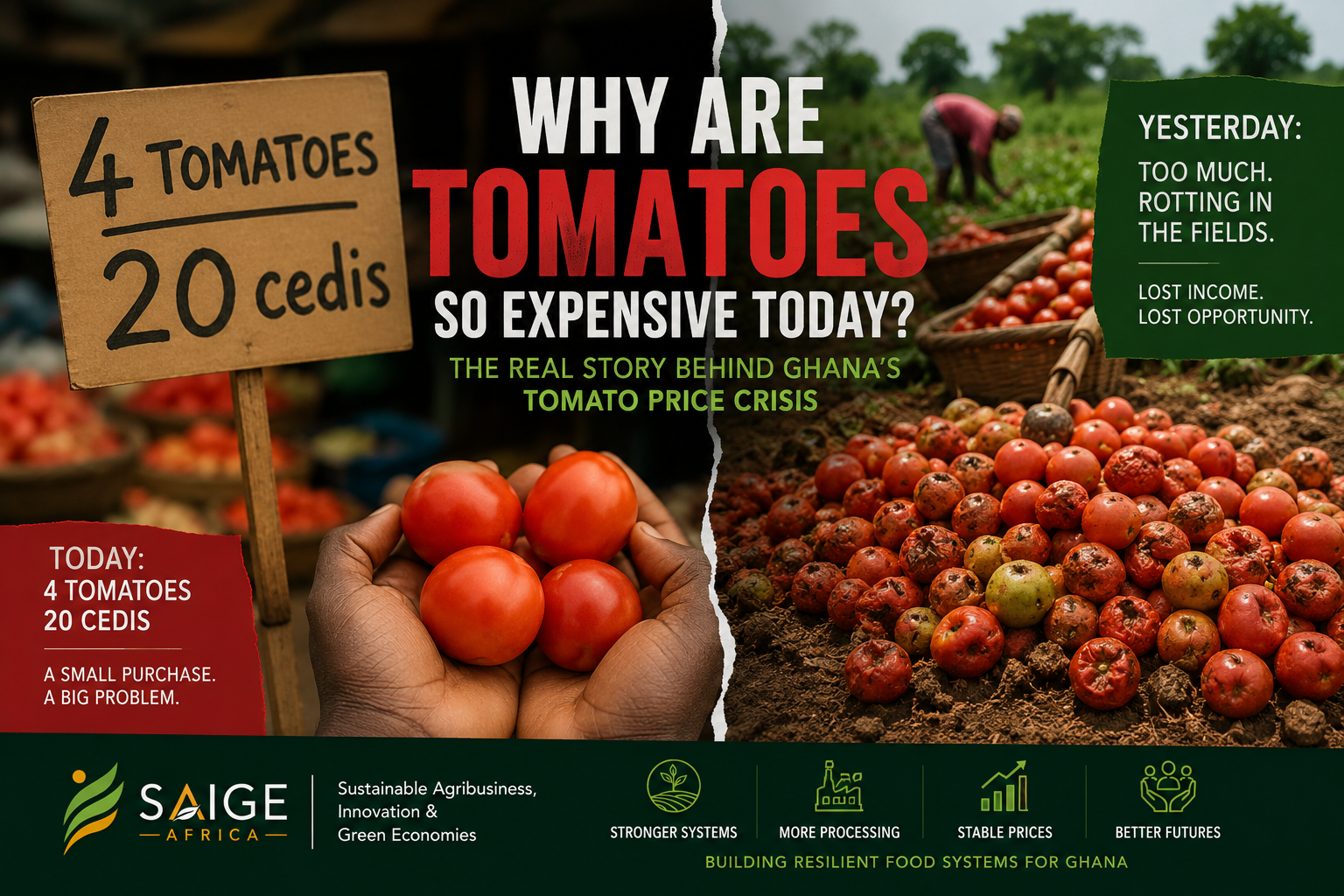
This morning I went to the market to buy tomatoes for the house. What I came back with was four small pieces for twenty cedis. Four! I had to ask the seller twice to be sure I heard right. Not too long ago, the same amount of money would have fetched me a decent little heap enough to make a proper pot of stew or soup. Today, even that feels like a stretch. Standing there in the market, it hit me how quickly things have changed with this one simple ingredient that every Ghanaian household uses almost daily.
It got me thinking about what has been happening these past few months. Back in April and May, the story was completely different. In places like Asante Akyem Agogo in the Ashanti Region, tomato farmers were drowning in produce. Their fields were full, too full. Harvest after harvest came in, but there weren’t enough buyers. We heard stories of tomatoes rotting right on the farms and in storage because the market was flooded. Farmers were appealing to anyone who would listen: come and buy directly from us, don’t let all this good food go waste. Some even took to social media and radio calling on Ghanaians to support them. The Member of Parliament for Asante Akyem North, Hon. Ohene Kwame Frimpong, raised their voices in public, highlighting the frustration and loss. We’ve seen this kind of appeal before, government stepping in at times to buy surplus tomatoes and onions to feed school children and ease the pressure on farmers.
Fast forward to now, late June, and the situation has flipped upside down. Tomato prices have climbed sharply. Earlier reports showed year-on-year increases of over 35% in May alone (MyJoyOnline, 2026;https://www.myjoyonline.com/supply-disruptions-push-fresh-tomato-prices-up-by-35-8-in-may-2026/), and the pressure is still being felt in markets across Accra, Kumasi and other places. A small bucket that used to be more affordable has become noticeably more expensive. The main reason? Supply disruptions from Burkina Faso, the country Ghana depends on heavily for fresh tomato imports. Issues around exports, security along the trade routes, and other challenges have reduced the flow of tomatoes coming in. What was once so abundant that it was rotting away is now scarce and costly. The people feeling it most are the market women trying to make a living and ordinary families trying to put food on the table without breaking the budget.
This back-and-forth with tomatoes is not new, but it keeps hurting. Ghana consumes hundreds of thousands of tonnes of tomatoes every year, yet we produce less than half of what we need locally (Citi Newsroom, 2026,https://citinewsroom.com/2026/02/ghana-loses-gh%C2%A25-7bn-annually-to-tomato-import-dependency-cag/). The rest comes from across the border. When that supply chain faces problems whether from weather, policy, or security, prices jump almost overnight. At the same time, when our own farmers harvest in peak season, we often lack the systems to absorb the excess. We have limited processing factories that can turn surplus fresh tomatoes into paste, canned products, or other forms that last longer and create more value. Some old processing plants have struggled or closed in the past due to competition from cheap imports, and while there are efforts to revive and build new ones, the capacity is still far from enough. This means when there is plenty, a lot goes to waste. When there is shortage, we scramble and pay more.
The human side of this is what stays with you. For farmers in the production areas, a glut means lost income after months of hard work, inputs, and hope. For market women and traders, it means unpredictable supply and squeezed margins. For households like mine and millions of others, it means adjusting how we cook, maybe less stew, more alternatives, or stretching what little we buy. That four-small-tomatoes-for-twenty-cedis moment this morning is small on the surface, but it adds up across thousands of kitchens every day. It also reminds us how connected our daily lives are to bigger issues in agriculture and trade.
Government has been making moves. There are projects to expand irrigation so farmers can grow tomatoes more consistently throughout the year instead of just one main season. There is distribution of improved seeds and training. Plans are in place to boost local production significantly by the end of 2026 and reduce heavy reliance on imports. Some processing facilities are being looked at for revival or new investment, especially in regions with good production potential. These are positive steps. But the gap between plans and results on the ground is still wide. Building real processing capacity here in Ghana would change the game, it would give farmers a reliable buyer even when the fresh market is flooded, create jobs in value addition, cut down on the huge import bill we pay every year, and help stabilise prices for consumers.
What we need is less reaction and more steady building. We have the land, the farmers, and the demand. What has been missing is consistent investment in storage, processing, and market systems that work for both producers and buyers. If we had factories turning excess tomatoes into paste during the glut periods, we wouldn’t be as vulnerable when imports slow down. If farmers had better post-harvest handling and guaranteed off-takers, fewer tomatoes would rot in the fields. These are not impossible things, other countries have done it. We can too, if we treat it as a real priority and not just something we talk about when prices spike or harvests waste.
That small purchase this morning stayed on my mind. Four tomatoes for twenty cedis is not just about one trip to the market. It is a daily reminder of a system that still swings too wildly between too much and too little. Our farmers work hard. Our market women hustle every day. Our families deserve food that is available and affordable without constant drama. We can do better than this cycle.
The question is whether we will be able to move fast enough to fix the real bottlenecks before the next swing hits us again
SAIGE Africa (2026). The Volatile Tale of Ghana’s Tomatoes: From Glut to Gold. Ebenezer Amoquandoh. saigeafrica.org
The research practice of SAIGE Africa — independent, applied and open.